
On average, hundreds of pets go missing every day in the UK, and each year thousands of lost and abandoned animals are taken in by charities and rescue centres. Some are much-loved pedigrees; many never make it home simply because they can’t be identified. A microchip changes that — it’s a tiny, permanent piece of ID that gives your cat the best possible chance of being reunited with you if the worst happens. Having qualified as a veterinary nurse and later trained as an implanter myself, microchipping is something I feel strongly about, and I’ve chipped every one of my own cats.
There’s also an important change every UK cat owner needs to know about: microchipping is no longer just a good idea — in England it’s the law. This guide is part of our wider owners’ guide, and covers the benefits, the legal position, and the truth behind the myths I still hear.
Microchipping is now a legal requirement in England
As of 10 June 2024, it became a legal requirement in England for all owned cats over the age of 20 weeks to be microchipped and for their details to be registered on a compliant database. Owners who don’t comply can be given 21 days to have their cat chipped, and may face a fine of up to £500 if they still fail to do so.
It’s also your legal responsibility to keep those registered details up to date — so if you move house or change your phone number, you must update the database. The official guidance is well worth reading in full on the GOV.UK microchipping page. (This law applies to England; if you live elsewhere in the UK, do check your own nation’s current rules.)
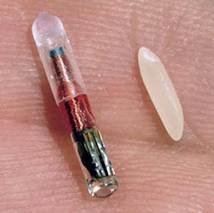
How microchipping actually works
A microchip is a tiny capsule, about the size of a large grain of rice, implanted just under the skin between the shoulder blades. It holds a unique number linked to your name and contact details on a national database. If your cat is found and scanned by a vet, shelter or warden, that number brings up your details so you can be reunited.
The chip has no battery and no moving parts — it’s completely inactive until a scanner passes over it, drawing just enough power to transmit the number. That’s why there’s nothing to wear out: a chip is designed to last your cat’s whole lifetime.
One word from experience: placement matters. Years ago, one of my own chips was sited too high in the scruff and gradually migrated forward. Modern chips are designed with anti-migration properties and, when implanted correctly by a trained, certificated implanter or vet, stay put. If you’re having a kitten chipped before collection, do ask who’s doing it and where.
Common myths and worries — and the truth
Over the years I’ve heard every concern going. Here are the ones that come up most.
“It’ll hurt my cat.” The implant needle is larger than a routine vaccination needle, so it can be momentarily uncomfortable, but most cats barely react. The newer mini-chips use a smaller gauge again, reducing discomfort further. I always check a cat is well first and would postpone if there were any skin condition or illness.
“The chip will set off a reaction or move around inside.” Chips are made from inert, biocompatible material that won’t cause an allergic reaction or degrade over time. Implanting needles and chips are sterile, and with the site cleaned beforehand the infection risk is very low. The scanning itself uses harmless RFID technology — no more dangerous than listening to the radio.
“My cat never goes out, so there’s no point.” Honestly, no garden is fully escape-proof against a determined cat. Doors get answered, fences blow down in storms, and cats are superb climbers and jumpers. Indoor cats get out more often than owners expect — and if yours has no ID, finding them again is desperately hard. For more on indoor life, see keeping indoor cats happy.
“A show judge will feel the chip and penalise my cat.” As someone who shows Siamese, this one once worried me too. The reassurance is that judges will not penalise a cat for a chip they can feel, nor disadvantage it against an unchipped cat. (A scab or missing fur at the implant site is a different matter, so do let it fully heal before a show.) The modern mini-chips are practically impossible to feel anyway.
A chip is your cat’s best ID — but back it up
Microchipping is safe, durable and dependable, but no system is perfect, and a chip alone can’t guarantee a lost cat comes home. The strongest approach is more than one form of ID: a chip plus a quick-release collar and a tag noting that your cat is chipped and giving a contact number. A kind stranger who finds your cat may then be able to reach you directly.
Worth knowing too: the GCCF registration document for pedigree cats includes a facility to record the microchip number, which is a useful link between cat and owner. If you ever rehome your cat, you must pass on the chip details and arrange for the registered ownership to be transferred on the database.
If you have any lingering doubts, talk them through with your vet — including any myths you’ve picked up along the way. For broader feline welfare guidance, our cat nutrition advice is a good next read. So go forth and chip with confidence — it really is one of the kindest, simplest things you can do for your cat.
New to cat ownership?
From microchipping to settling a new cat in, our owners’ guide walks you through the essentials.
Frequently asked questions
Is microchipping a cat a legal requirement in the UK?
In England, yes — since 10 June 2024 all owned cats over 20 weeks old must be microchipped and registered on a compliant database, with fines of up to £500 for non-compliance. If you live elsewhere in the UK, check your nation’s current rules, as they may differ.
Does microchipping hurt a cat?
The implant needle is bigger than a vaccination needle, so it can be briefly uncomfortable, but most cats barely react and any discomfort passes quickly. Newer mini-chips use a smaller needle still.
Will a microchip track my cat’s location?
No. A microchip is not a GPS tracker. It’s a passive ID chip that only does anything when a scanner is passed over it, revealing a number linked to your details on a database — it can’t show where your cat is.
What should I do if I move house?
Update your contact details on the microchip database straight away. Keeping those details current is your legal responsibility, and an out-of-date record is the most common reason a chipped cat still isn’t reunited with its owner.
Written from years of living with and loving Siamese cats. Find out more about me and this site.