
A kitten class is the gentlest way into GCCF showing there is. The kittens are young, the stakes are low, and most of the people around you remember their own first show well enough to be kind about yours.
It is also where a lot of show cats are made or ruined. A kitten that has a calm, boring first show often grows into an adult that enjoys the hall. One that has a frightening first show can decide, for good, that it wants nothing to do with it.
Here is what you need to know before you enter a kitten: the age rules, the titles kittens can now win, and how to prepare a youngster so the day goes well for both of you.
| When | What to do |
|---|---|
| As soon as the kitten comes home | Transfer it into your name; leave the carrier out with a blanket in it |
| Every day from then | A few minutes of judge-style handling: lift, mouth, tail, ears |
| When the schedule comes out | Check the kitten will be 14 weeks or older on the day; check the vaccination dates |
| By the closing date | Enter one breed class and a couple of side classes |
| The week before | Trim claws, check ears, keep the coat in condition |
| The night before | Pack the show whites and the paperwork |
| On the day | Arrive for vetting in, settle the kitten, then leave the judge to it |
How old does a kitten have to be?
Kitten classes are for kittens from 14 weeks old up to the day before they turn nine calendar months, counted on the date of the show. That is how a 2026 show schedule sets it out, but check the schedule for each show you enter, because it is the schedule that governs on the day.
So the window is short, a little under six months, and a kitten that is 13 weeks and six days on show day is not eligible.
Why breeders rarely show the kittens they sell
Here is a quirk that catches new breeders out. GCCF guidance says kittens should not leave home before 13 weeks, and mine never leave sooner. Kitten classes start at 14 weeks.
So by the time a kitten is old enough to show, it has usually gone to its new family.
That means if you have bought a kitten with showing in mind, the first show is yours to do, not your breeder’s. Ask your breeder for help. Most of us are delighted when a kitten we bred goes to someone who wants to show it, and we will happily tell you which classes to enter and how that particular kitten likes to be handled.
And if you are the breeder, a kitten you keep back is the one you show yourself. Plan its first outing early.
Paperwork first
Before you enter, three things need to be in place.
Registration in your name. The exhibitor has to be the registered owner. One 2026 show schedule asks for the transfer to be done no later than ten days before the show, so if you have just collected your kitten, transfer it into your name straight away. My guide to registering a litter with the GCCF explains the transfer from the breeder’s side.
Vaccinations. This is the bit to check most carefully, so here are the GCCF’s rules for a kitten with two doses on its certificate:
- the second dose must be given more than seven days before the show
- the two doses must be no more than six weeks apart, or the course has to restart
- the certificate must come from a vet practice, with the practice stamp against each dose
Do the sums before you enter. A kitten vaccinated at 9 and 12 weeks, a common UK schedule, clears the seven days at just over 13 weeks, so the 14-week age rule is the one that bites. A kitten vaccinated later, say at 10 and 14 weeks, cannot show until it is over 15 weeks old, whatever its age says. Write the kitten’s full registered name on the front of the certificate, because the duty vet checks it against your vetting-in slip.
A vet you trust and a kitten that is well. Every cat is checked at vetting in. A kitten with sticky eyes or a runny nose will be sent home, and quite right too.
Filling in the entry form
The details for a pedigree kitten come straight off its GCCF registration certificate, and the GCCF’s beginner’s page lists what you will need: the registration number, the kitten’s name, its GEMS code, sex and date of birth, the sire’s and dam’s names, the breeder’s name, and the classes you are entering.
If the transfer into your name has been sent off but not come back yet, the GCCF says you can write TAF (transfer applied for) in place of the number. Make sure it really has been applied for. Then keep a copy of your form, check it against the paperwork when it arrives, and tell the show manager in writing about any mistake.
Some shows are STAR shows, which you can enter online straight from your kitten’s record on the GCCF database. It is much harder to get wrong.
The kitten titles
Since 5 April 2025 kittens have their own titles. Pedigree kittens can become a Kitten Champion, and household pet kittens a Kitten Master Cat.
Both need three certificates from three different judges, on three different show dates. That last part matters: at a back-to-back weekend only one certificate counts. My guide to how GCCF cat shows work for beginners sets out the full title ladder from Kitten Champion all the way up.
Entire and neutered kittens compete together in the same class, split by male and female.
Household pet kittens
Any kitten can be shown, pedigree or not. In the household pet section, the GCCF says kittens under nine months usually have one class, or two split by age, and some shows also split them by colour. Household pets are judged partly on temperament, so a calm, friendly kitten has a real advantage here.
One rule to know before you enter: all non-pedigree cats over six months old must be neutered to be shown. So a household pet kitten between six and nine months needs to have been neutered before the show.
Preparing a kitten for the judge
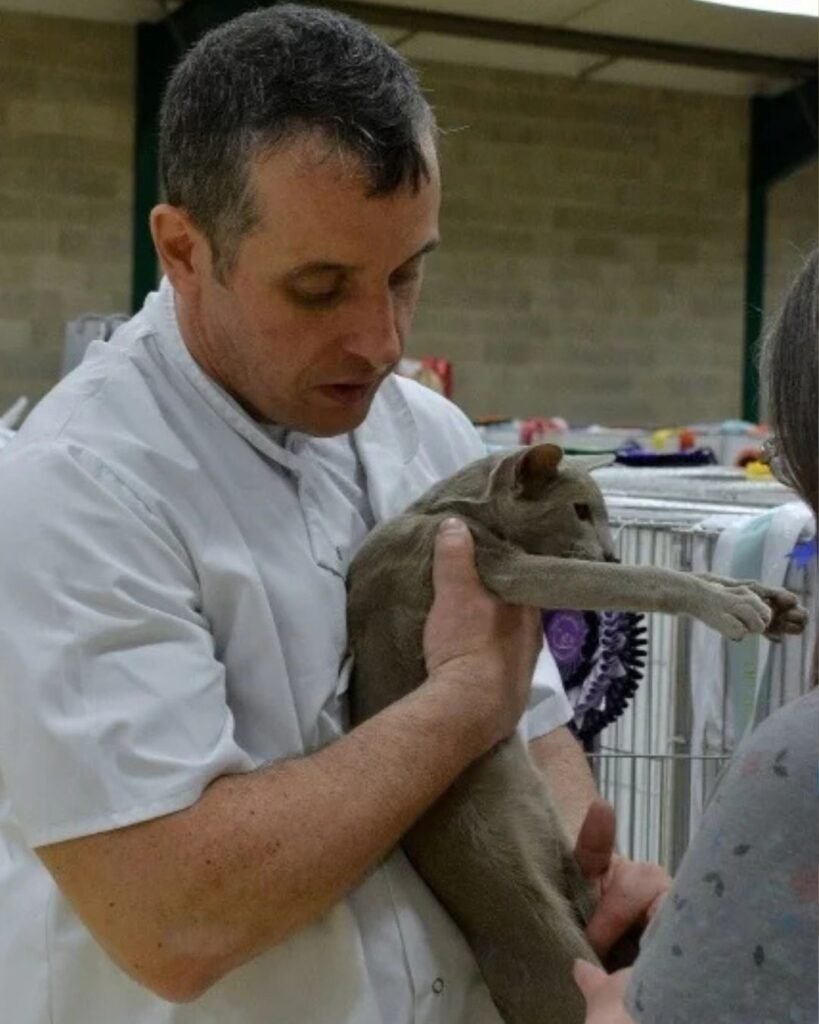
Judges handle every cat. We look in the mouth, feel the body, run a hand down the tail and check the eyes and ears. A kitten that has never been handled like that by a stranger is going to find it alarming.
So practise at home, little and often:
- lift your kitten and hold it the way a judge would, briefly, then put it down and reward it
- open its mouth gently and look at the teeth
- run your hand down the tail and feel along the body
- get friends and family to do the same, so it is not only you
A few minutes a day for a few weeks is worth more than an hour the night before.
Get your kitten used to travel as well. Short, boring car journeys that end somewhere nice (home, with tea) teach it that the carrier is not always the road to the vet. And let it hear a bit of noise at home: a busy show hall is loud, and a kitten that has only ever known a quiet house finds that first hour hard. My article on socialising kittens, and why sooner is better covers the groundwork, and it is the same groundwork a show kitten needs.
Trim the claws a day or two before, check the ears, and keep the coat in good condition. For the full list of what goes in the car, see my judge’s packing list on what to take to your first cat show.
Go to a show first, on your own
The GCCF’s advice for anyone thinking of showing is to visit a show before you enter one, and it is good advice. Go without the kitten. Watch how the hall works, see what a pen looks like, and talk to people on the benches once the judging is over. Most exhibitors love talking about their cats, and about yours.
While you are there, find your local cat club. The GCCF can give you the secretary’s number, and joining is the quickest way to make friends who show. Some shows even run a buddy system or have a helper for new exhibitors. Ask the show manager when you enter.
What happens on the day
Your kitten goes through vetting in, then into a pen that looks exactly like every other pen in its row: white blanket, white tray, white bowl. That is deliberate. The judge should not know whose kitten it is.
Then you leave. The judges and their stewards work round the hall in white coats, taking each cat out in turn. Judges usually do not talk to exhibitors until their judging is finished, so do not hover, and please do not try to catch the judge’s eye.
Results go up on the board as slips through the day. If your breed class result has not appeared by 3pm, the GCCF suggests asking at the show manager’s table.
Which classes to enter
Keep it small. One kitten, one breed class and maybe a couple of side classes. Entering everything on the schedule makes for a very long day for a very young cat.
The breed class is where your kitten is judged against the breed standard. Side classes, the miscellaneous classes on the schedule, are often the most fun. Read the schedule properly and ask the show manager if a class description is not clear. That is what they are there for.
Showing a kitten: quick answers
How old does a kitten have to be to show?
At least 14 weeks on the day of the show, and under nine calendar months. Always check the schedule.
Can neutered kittens be shown?
Yes. Entire and neutered kittens compete together in the kitten classes, split by male and female.
What is a Kitten Champion?
The title a pedigree kitten earns with three certificates from three different judges on three different show dates. It has been awarded since 5 April 2025.
Can I show a non-pedigree kitten?
Yes, in the household pet section. Household pet kittens can earn the Kitten Master Cat title on the same three-certificate basis. Non-pedigree cats over six months must be neutered to show.
Does my kitten need both vaccinations before a show?
Yes. Under the GCCF rules the second dose must be more than seven days before the show, and no more than six weeks after the first.
Can I stay with my kitten while it is judged?
At most GCCF shows, no. Exhibitors leave the hall during judging and come back for the results.
What a good first show looks like
Not a rosette. A kitten that comes home, eats its tea and falls asleep on the sofa.
When you get home, the GCCF suggests keeping a show cat apart from your other cats for a few days if you can, to limit the chance of passing on anything picked up in the hall.
If your kitten handles the day well, you have a show cat in the making. If it is miserable, bring it home, give it time, and try again in a few months, or accept that it is a pet who would rather not. Neither is a failure.
If you are wondering what judges are actually looking for in the adult classes your kitten will graduate to, my article on the five ingredients of a show-winning cat is the next thing to read.
I’m writing a book on showing: what judges look for, how to prepare, and how to get through your first season. Join the list below and you’ll hear the moment it’s ready.