
It is 5am. The car is running, the cat is in the carrier giving you the look, and you are standing in the hallway trying to remember whether you packed the water bowl.
You did not pack the water bowl.
Everyone forgets something at their first cat show. This list is here so it is something small. I judge at GCCF shows, and my wife Paula is a show manager, so between us we see show day from both ends: the exhibitors arriving at vetting in, and the cats sitting in their pens waiting for the judge. Here is what to take, what to leave at home, and the bits that catch first-timers out.
Here is the whole list first, so you can tick it off the night before. The reasons follow.
| Pack this | Why |
|---|---|
| Entry confirmation | Vetting-in time and anything that show does differently |
| Vaccination certificate | Your cat must be vaccinated as the schedule requires |
| Registration in your name | The exhibitor has to be the registered owner |
| White blanket (and a spare) | Most GCCF shows use plain white pen kit |
| White water bowl | Plain white, no pattern |
| White litter tray | Plain white, sized for your pen |
| White food bowl | For after judging |
| Vetting-in slip | Goes to the vet with the certificate |
| Cloth (and cat-safe disinfectant) | To wipe the pen; never spray it in |
| Hot water bottle or ice pack | Allowed hidden under the blanket |
| A carrier your cat trusts | Calm in the car, calm in the hall |
| Your cat’s usual litter and food | Unless the schedule says litter is provided |
| Comb, soft cloths, cotton pads | Last-minute touch-ups only |
| Wipes, poo bags, kitchen towel | Trust me |
| Drink, food, a jumper, a pen | Show days start early and run long |

The night before: paperwork
Paperwork first, because no amount of white fleece will get your cat into the hall without it.
Your entry confirmation. Whatever the show sent you when your entry was accepted. Read it the night before, not in the car park. It tells you the vetting-in time and anything that show does differently.
Your cat’s vaccination certificate. This is the one that sends people home. The duty vet checks it at vetting in against the GCCF vaccination rules, so look at it properly the night before:
- The name must match. The GCCF asks exhibitors to write the cat’s full registered name on the front of the certificate. If it only shows a pet name, the breed, colour, sex and date of birth have to match your vetting-in slip exactly.
- It must come from a vet practice, with the practice stamp against each vaccination or the practice details printed on it.
- The dates must work. The rules depend on how many doses your cat has had. A kitten with two doses needs the second one more than seven days before the show. An adult on boosters needs the most recent one within 15 months and 7 days of the show, which is a concession the GCCF brought in in 2021 “until further notice”, so check the current rules if your cat is close.
If the booster is due, book it weeks ahead, not the week of the show.
Your vetting-in card or slip, if the show sends one. It goes to the vet with the certificate.
Proof the cat is in your name. The exhibitor has to be the registered owner. One 2026 show schedule asks for the transfer to be done no later than ten days before the show. If you bought a kitten recently and the transfer is still sitting in your inbox, do it now.
The show whites
At most GCCF shows your pen is equipped in plain white, so every cat is judged on the cat and not on its owner’s taste in blankets. That means a white blanket, a white water bowl, a white litter tray and a white food bowl for after judging. Plain white. No patterns, no coloured edging, no little paw prints, however cute.
I won’t repeat the full list here, because I have a whole page on GCCF show whites and the complete kit for cat shows, including the single and double pen kits we sell. Take a spare blanket. Accidents happen, usually five minutes before the judge arrives.
Two things that are not white but are allowed, according to the GCCF’s own beginner’s page: a hot water bottle or an ice pack hidden under the blanket, depending on the weather and the hall. Halls in January are cold. Halls in July are not.
Pack a cloth for wiping out the pen when you arrive. If you use disinfectant, put a cat-safe one on the cloth. Never spray it into the pen.
The Supreme is the exception. It works differently and pens are dressed with drapes, which I cover in my guide to making your own show drapes for the Supreme.
For the cat
A carrier your cat already trusts. Secure, well ventilated, and not brand new that morning. If the only time your cat sees the carrier is on the way to the vet, start leaving it out with a blanket in it a few weeks before.
Litter your cat is used to, unless the schedule says the show provides it. A strange litter in a strange hall is a lot to ask of a cat.
Their usual food and water from home. Same food, same routine. A show is not the day to try something new.
A small grooming kit for last-minute touch-ups: a comb, soft cloths and cotton pads for eyes and ears. The real grooming happens before the show, and I’ll come to that.
Wipes, poo bags and a roll of kitchen towel. You will need at least one of these. You will not know which until it is too late.
For you
Show days start early and run long. Pack a drink, something to eat and a jumper (halls can be cold first thing). Bring a pen for the catalogue and something to carry your rosettes in, because optimism is free.
You will spend part of the day outside the hall. At most shows exhibitors leave while the judging happens, then come back to find out how they did. My guide to how GCCF cat shows work for beginners explains the whole day, from vetting in to the title system.
How show day runs
Knowing the shape of the day is half of what you need to pack for it. Times vary from show to show, so your schedule always wins, but the GCCF describes a typical day like this:
| When | What happens | What you do |
|---|---|---|
| Arrival | Vetting in, usually with a queue | Have the certificate and slip in your hand; check the notice board for judge changes |
| Before judging | Cats settled in their pens | Set up the whites, offer food if you like, then take the food bowl out |
| Judging, normally from 10am | Judges and stewards work round the pens | Leave the hall and leave them to it |
| From about midday | The public are let in | Your cat is on show; this is when people ask you about it |
| Through the day | Results slips go up on the board | Check the board; if your breed class is not up by 3pm, ask at the show manager’s table |
| Around 5pm | The show closes | Leave the pen clean and tidy |
Swap your best blanket in at the last moment before judging. The one that has been in the pen since 8am may not be at its best by 10.
Buy a catalogue and check your entry details in it. If anything is wrong, tell the show manager straight away.
Getting there in one piece
Most first-show nerves are really car nerves, and the cat picks them up from you. Strap the carrier in with a seatbelt or wedge it in the footwell behind a seat so it cannot slide. Keep the car cool and the radio low, and cover half the carrier with a towel if your cat settles better in the dark.
Never leave a cat in a parked car while you sort out the hall. Not for five minutes. Not on a cool day.
If your cat arrives panting, drooling or hiding at the back of the carrier, give it time to settle before you even think about vetting in. My article on the signs of stress in cats and what actually helps is worth reading before your first show, not after.
What to leave at home
Anything that makes your pen identifiable during judging. No name cards, no rosettes from last time, no favourite toy with your cattery name on it. The whole point of the whites is that the judge does not know whose cat it is.
And leave the cat at home if they are not well. Every cat has to pass the vet at vetting in, and the GCCF lists what gets a cat turned away: fleas, ear mites, runny eyes, bare or scabby skin, and anything that looks like a respiratory infection. More importantly, a hall full of cats is the last place a poorly one should be.
When you get home
Unpack the cat before the car. Let it eat, sleep and tell you all about its day.
The GCCF also suggests keeping a show cat apart from your other cats for a few days afterwards, if you can, to limit the risk of passing on anything picked up in the hall. If you have breeding cats or a litter at home, that advice matters even more.
The real packing starts a week before
What you pack in the car matters far less than what you have done in the week before.
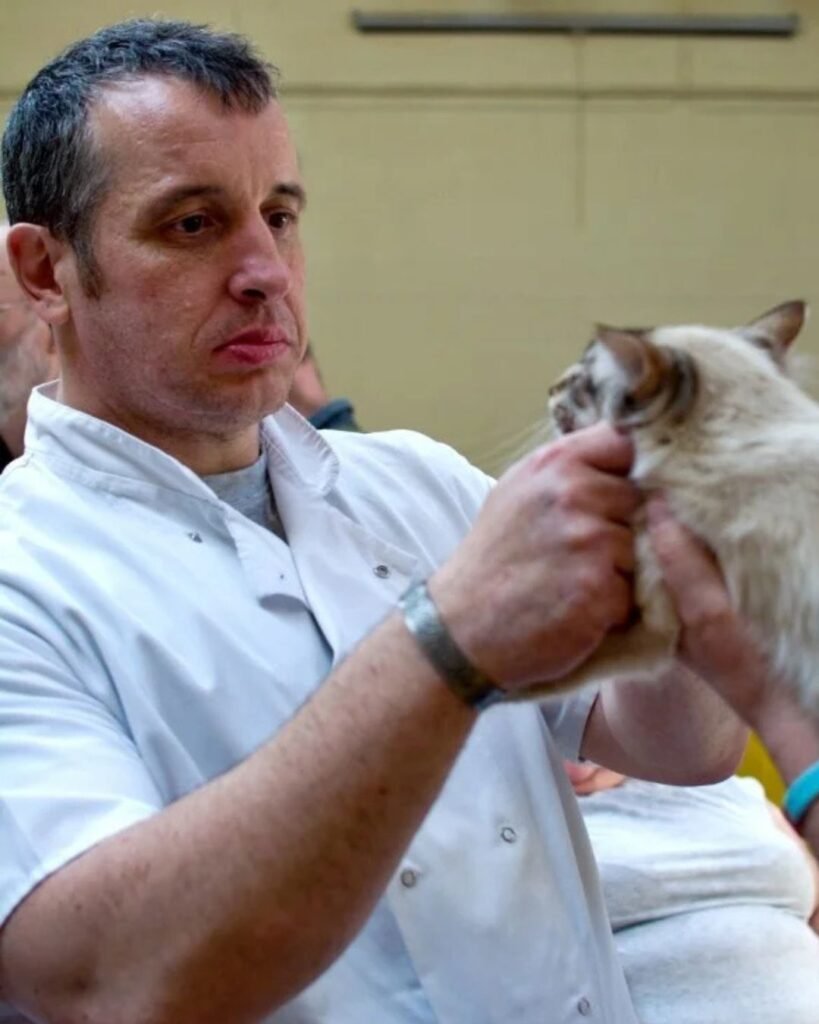
Judges handle your cat. We open the mouth, feel the body, run a hand down the tail and look at the eyes, ears and coat up close. A clean cat with trimmed claws who is used to being picked up by a stranger will show you at your best. A beautiful cat who has never been handled will show you at your worst.
So in the week before, trim the claws, check the ears, keep the coat in condition, and handle your cat the way a judge will. I go into what judges are really looking for in my article on the five ingredients of a show-winning cat.
Your first show: quick answers
Do I need show whites at my first show?
At most GCCF shows, yes: a white blanket, water bowl, litter tray and food bowl. The Supreme works differently.
Can I stay with my cat while it is judged?
At most shows exhibitors leave the hall during judging and come back for the results. At the Supreme, cats are taken to the judges and exhibitors stay.
What time should I arrive?
In time for vetting in. The time is on your entry confirmation and the schedule, so check it the night before.
Can I feed my cat at a show?
Yes, before judging, but the food bowl has to come out before judging starts, leaving only water. You can feed again once judging is over.
What time do cat shows open to the public?
Usually from about midday until the show closes at around 5pm. Check the schedule for the show you are visiting.
What happens if my cat fails vetting in?
It does not show that day. The duty vet should tell you why, and what to do next. Take it home and look after it. There will be other shows.
One last thing
No rosette is worth a frightened cat.
If your cat hates it, really hates it, bring them home and take the win. Some cats love the show hall. Some never will. The ones who love it tend to show at their best, and their owners are the ones who noticed early which kind of cat they had.
If you are thinking of showing a kitten first, my guide to showing a kitten at your first GCCF show covers the age rules and the new kitten titles.
I’m writing a book on showing: what judges look for, how to prepare, and how to get through your first season without making the classic first-timer mistakes. Join the list below and you’ll hear the moment it’s ready.