
Yes, an adult Siamese can be left alone for a normal working day. Before you breathe out, there is a catch, and it is the whole reason this page exists.
It has to have food, water, toys and something to do, and it has to be a cat that copes. Most do. Some do not, and a Siamese that is not coping will let you know in ways that are hard to miss (the bed is a popular place to leave the message).
I have bred Siamese and Orientals under my Burnthwaites prefix for more than twenty years and I am a certified feline behaviourist, so I hear about this from both ends: the new owner who is worried before the kitten arrives, and the owner whose cat has started falling apart every time the front door shuts. This guide covers how long is too long, how to tell a cat that is struggling from one that is just clingy, and what actually helps.
How long can you leave a Siamese?
It depends on the age of the cat far more than on the breed.
For an adult Siamese, my view is this: a normal working day is fine if the cat has food, water, toys and enrichment. Plenty of happy Siamese live with owners who go to work. What they do not cope with is being left with nothing, day after day, in a house where nobody comes home until late and then goes straight back out.
A kitten is a different matter. For a kitten under six months, I would keep it to about four hours, and if you are going to be out for longer, arrange for someone to pop in and check on them, feed them and play with them. That is the same advice I give in my Kitten Care ebook, because a young kitten left alone for a full day is bored, hungry and getting into trouble, often all three.
Holidays and weekends away need a plan too. A Siamese should not be left alone overnight with a big bowl of food and the hope that it will be fine. A cat sitter who visits at least once a day, ideally twice, or a good boarding cattery, is the kind answer.
Here is how I would think about it, at a glance:
| Situation | Time alone | What it needs |
|---|---|---|
| Kitten under six months | About four hours | Someone to pop in, feed and play if you are out longer |
| Adult Siamese on its own | A normal working day | Food, water, clean tray, toys, a view and proper play before and after |
| Two adult Siamese together | A normal working day | The same, times two; they keep each other company |
| Overnight or a weekend | Never left alone | A cat sitter at least once a day, ideally twice, or a good cattery |
| Older, ill or anxious cat | Ask your vet | Shorter absences and closer checks |
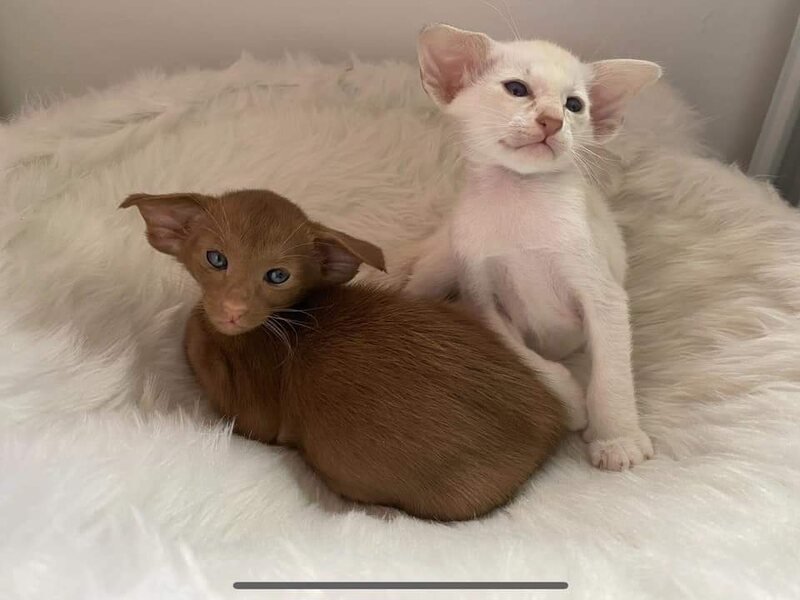
Clingy is not the same as anxious
Every Siamese is clingy. That is the breed. It follows you to the bathroom, sits on your work and sulks when you shut a door on it. None of that is a problem. It is a Siamese being a Siamese, and my guide to the Siamese cat personality goes into why.
Separation anxiety is different. It is a cat that genuinely cannot cope with being apart from you, and it shows up around the times you leave and while you are gone, not just as general devotion.
Vets and cat charities often list Siamese among the breeds more prone to it, along with the Burmese, and it makes sense: a breed built around people is a breed that notices when the people go. Kittens taken from their mother too early, or hand-reared, can also become unusually attached to their owners, which is one more reason good breeders keep kittens until at least thirteen weeks.
The signs of a Siamese that is not coping
Look for a pattern that lines up with you going out:
- crying or yowling as you get ready to leave, or for long periods once you have gone (a neighbour or a cheap camera will tell you)
- weeing or pooing outside the tray, often on your bed, your clothes or the spot by the door
- chewing, scratching or knocking things over that it leaves alone when you are home
- not eating while you are out, then eating as soon as you come back
- over-grooming, sometimes to the point of thin or bald patches
- a greeting so frantic it is more relief than hello
One of these on its own, once, is not a diagnosis. Several of them, most times you go out, is a cat telling you it is struggling.
A Siamese habit to watch for: chewing fabric
Siamese and Orientals are known for sucking or chewing wool and fabric: jumpers, blankets, the corner of the duvet. For some cats it is a comfort habit, and stress or boredom can make it worse when they are left alone.
Sucking is one thing. Swallowing fabric is another, because it can cause a blockage. If your cat is eating cloth, or you find chewed holes and the cat is off its food or being sick, call the vet straight away. Then put tempting fabrics out of reach and give the cat something safe to chew and plenty to do.
Rule out the body first
Before you treat any of this as behaviour, get your cat checked by your vet. Weeing in the wrong place can be cystitis or another bladder problem, and over-grooming can be skin trouble or pain. Both are common and both get blamed on “being naughty”.
If your cat, and a male cat especially, is straining in the litter tray and passing little or nothing, that is an emergency. Call your vet straight away, whatever the time.
And if your cat is peeing on the bed and you have ruled out the medical side, my book Stop Cat Peeing goes through the causes and fixes properly. You will also want my guide to cleaning cat pee so the smell actually goes, because if the cat can still smell it, it will go back.
What actually helps
Make leaving boring. A cat learns your leaving routine (keys, shoes, coat, a big goodbye) and starts panicking at the first step. Pick up your keys and sit back down. Put your shoes on and make a cup of tea. Leave without the ceremony and come back without it. It sounds daft. It works.
Give it a job while you are out. Hide a few treats or some of its dry food around the house before you go, leave a puzzle feeder with part of the day’s food in it, and make sure there is a window with something to watch. A cat that is busy hunting for its lunch is not sitting by the door.
Tire it out first. Ten minutes of proper play with a wand toy before you leave, then food, and you are far more likely to leave a sleepy cat than a frantic one.
Build up slowly. If your cat is really struggling, start with very short absences, a few minutes, and come back before it gets upset. Then stretch the time out a little at a time. You are teaching the cat that you always come back, and it can only learn that at a pace it can cope with.
Consider a second cat. For a lot of Siamese, the best cure for loneliness is a friend, and two Siamese (or a Siamese and an Oriental) will keep each other company while you are out. It is not a fix for a cat that is already anxious, and it is a fifteen-year decision, so read my article on whether Siamese cats get along with other cats before you go looking.
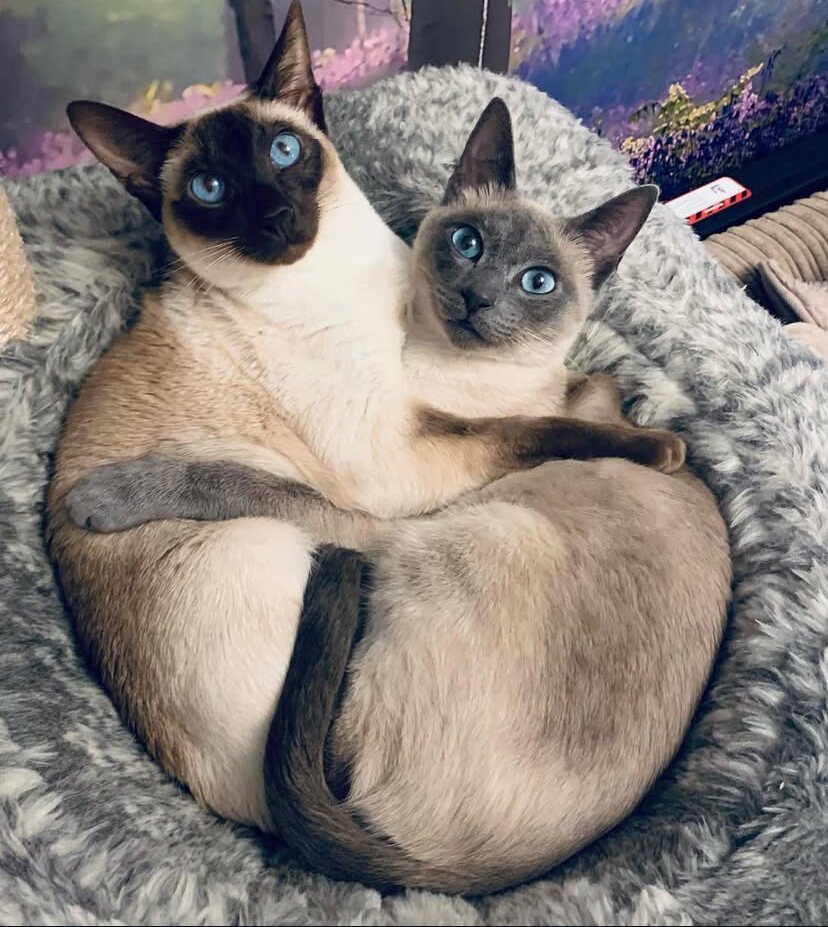
Set the house up for the hours you are out
A Siamese on its own needs the house to be interesting and safe.
Give it height and a view: a tall cat tree or a shelf by a window that looks out on something with birds in it. Rotate the toys so there is something new every few days, rather than leaving the same mouse under the sofa for a month. Put away anything that is dangerous to chew or swallow, such as hair ties, string and elastic bands, because a bored Siamese will find them. And leave a warm bed somewhere it can see the door, because most of them will sleep the day away by it anyway.

Cat sitter or cattery for holidays?
Both can work. A Siamese that loves its routine and its own sofa often does best with a cat sitter who visits twice a day, plays, and sends you a photo. A confident, sociable cat can do very well in a good boarding cattery, where there are people about all day.
Whichever you choose, visit first, ask how much time someone will actually spend with your cat (a Siamese needs conversation, not just a full bowl), and leave something that smells of home. For a cat that is already anxious, a familiar sitter in its own home is usually the gentler option.
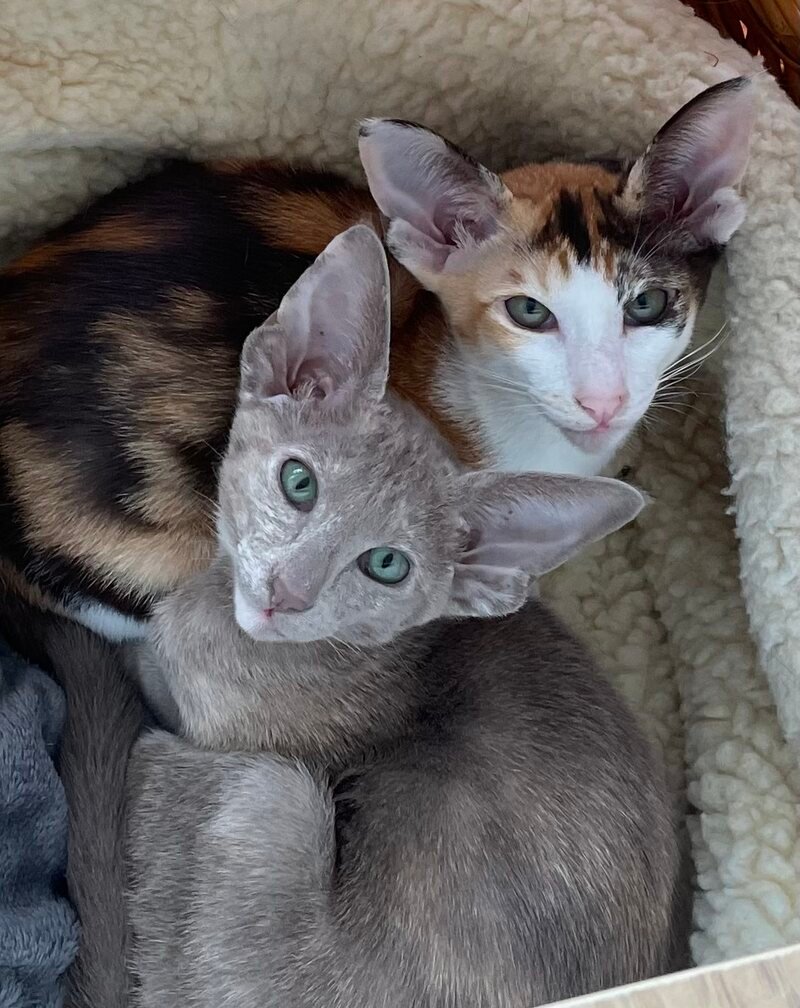
Can two Siamese be left alone for longer?
Two cats keep each other busy, so a pair usually copes with your working day better than one does. It does not mean you can leave them for a weekend. They still need food, fresh water, clean trays and someone checking on them every day.
What does not help
Telling the cat off when you get home. It cannot link the puddle on the bed to the telling-off, and all it learns is that your return is now frightening too, which makes the anxiety worse.
A huge emotional goodbye. You mean well. To the cat, it is a warning that something bad is about to happen.
Waiting for it to sort itself out. Separation anxiety tends to get worse with time, not better, and the earlier you deal with it the easier it is.
Will it sulk when you get back?
Quite possibly, and it is not a sign of anything wrong. Many Siamese greet you after a holiday with a cold shoulder for an hour, followed by an evening of being glued to your lap as a punishment. That is the breed telling you, at length, what it thought of your trip. It is a very different thing from a cat that is frantic every single time you leave the house for an hour.
When to get help
If your cat is still struggling after a few weeks of the steps above, it is time for help. My guide to stress in cats covers the wider picture, and my book The Calm Cat takes you through calming an anxious cat step by step.
If you would rather someone looked at it with you, get in touch through my contact page. I do still do behaviour home visits, and seeing the cat in its own home, with its own routine, usually tells me more than an hour on the phone.
Your questions about leaving a Siamese
Is it cruel to have just one Siamese?
No, not if someone is around a good part of the day and the cat gets proper play and attention. It becomes unfair when a single Siamese spends most of every day alone with nothing to do.
Can a dog keep a Siamese company?
Often, yes, if the dog is calm and cat-friendly and they get on well. Plenty of Siamese adore their dog. My article on Siamese cats and dogs explains how to introduce them.
Should I leave the radio or TV on?
Some owners find a little background noise helps their cat settle. It does no harm, but it is no substitute for play, food puzzles and a window to watch.
Do calming diffusers help?
Pheromone diffusers help some cats feel more settled at home and are worth trying alongside the changes above. They are not a cure on their own, and a cat whose behaviour has changed should see a vet first.
Does a camera help?
A pet camera is a cheap way to see what really happens after you leave, and it often settles the question of whether you are dealing with a bored cat or an anxious one.
Are you out too much for a Siamese?
This is the uncomfortable bit, and I would rather say it than not.
If you are out from early morning to late evening most days, nobody is home at lunchtime, and there is no other pet in the house, a Siamese is going to find that hard. So would an Oriental or a Balinese. That is not a judgement on your job. It is the honest fit between a very sociable breed and a very empty house.
You have three good options: a second cat, a daily visitor, or a more independent breed. My honest guide to whether a Siamese is right for you will help you work out which.
I am writing a book about living with Siamese, Orientals and Balinese, and this is one of the questions it will answer. Join the newsletter below to hear first when it is out.