Siamese cats are, to my mind, one of the most rewarding cats you can share your life with — clever, affectionate and endlessly characterful. But I’ll be honest with you, because I’d rather you went in with your eyes open: a Siamese is not the right cat for everyone, and a mismatch makes nobody happy — least of all the cat.
This guide walks you through what living with a Siamese is really like — the wonderful bits and the demanding bits — so you can decide honestly whether one belongs in your home. If you’d like a quick steer first, take the quiz below; then read on for the detail.
Why you can trust this guide
Plenty of pages will tell you Siamese cats are “affectionate and vocal” and leave it there. I’ve spent decades with this breed — as a GCCF-registered breeder, as a cat show judge, and as a feline behaviourist helping owners whose cats have gone wrong somewhere along the way. I’ve bred them, judged them on the show bench, homed kittens well (and occasionally seen homes turn out to be a poor fit), and taken the phone calls when a mismatch unravels. The single biggest lesson from all of it is this: almost every “problem Siamese” I’ve ever been asked about was a perfectly normal Siamese in the wrong home. That’s why this page exists — and why it’s honest rather than salesy. I’d far rather talk you out of a Siamese today than see one rehomed in two years’ time.
What a Siamese cat is really like
If you take one thing from this page, let it be this: a Siamese wants to be part of your life, not a decoration in your home. A few traits define the breed.
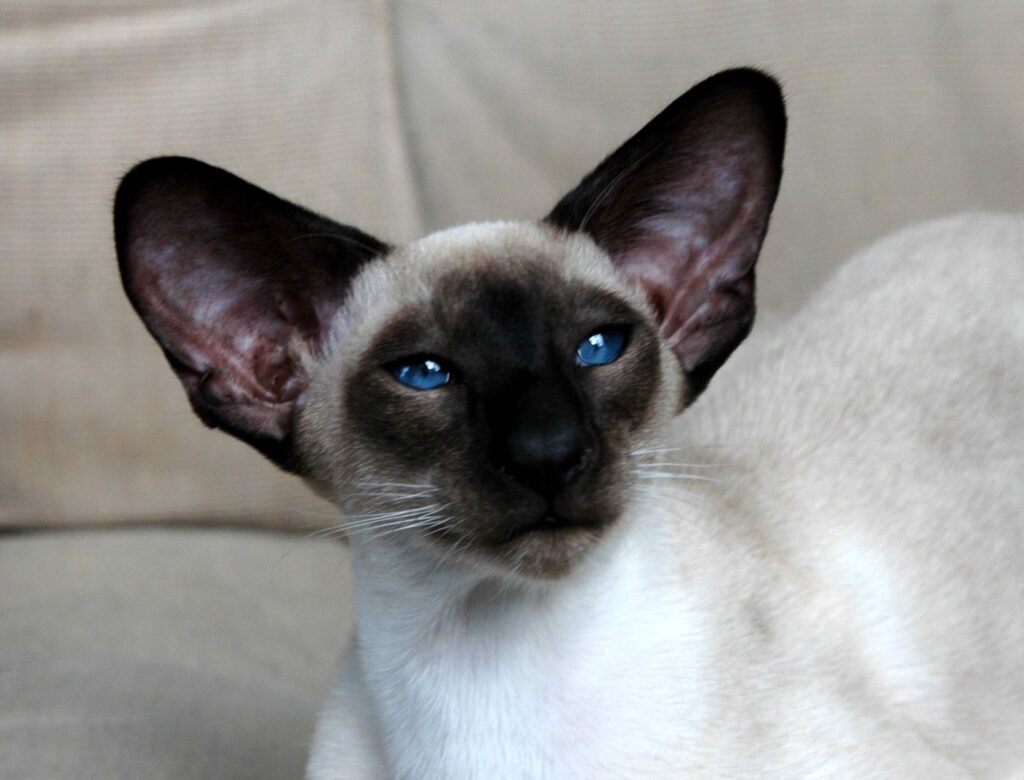
Deeply affectionate and people-focused. Siamese bond hard to their humans. They’ll follow you from room to room, “help” with everything you do, and many are genuine lap cats who want to be on you, not just near you. If you want a cat that’s truly involved with your day, few breeds do it better — they’re often described as more dog-like than cat-like in how they attach to their person.
Famously vocal. Siamese talk — a lot. They have a distinctive, slightly raspy voice (people often compare it to a baby’s cry) and they’ll use it to tell you when they’re hungry, bored, pleased to see you, or simply have an opinion about your choices. To many of us this constant “conversation” is half the charm. If you dream of a silent, self-contained cat, it may drive you up the wall.
Clever and easily bored. This is a busy, intelligent breed. Give a Siamese puzzle feeders, climbing, daily play and your company and they’re a delight; leave them under-stimulated and that intelligence turns into mischief — opened cupboards, unrolled loo paper, knocked-over ornaments, and yet more talking. Many Siamese can be taught to fetch, walk on a harness, or open doors (whether you want them to or not).
Active and playful well into adulthood. Siamese stay kitten-like for years. They love to climb, chase and play, so a cat tree, shelves and a rotation of toys aren’t optional extras — they’re how you keep a Siamese happy and out of trouble.
Sleek, striking and surprisingly low-maintenance to groom. The short, fine, close-lying coat needs very little: a weekly stroke-over with a soft brush is plenty, and they shed far less than many breeds. They come in a range of colourpoints — from the classic seal and blue through to chocolate, lilac, red, cream and tortie. You can explore the colours on our Siamese breed profile.
Generally healthy and long-lived. A well-bred Siamese from health-tested lines is typically a hardy cat that often lives 15–20 years. As with any pedigree, buying from a responsible, GCCF-registered breeder who health-tests their cats is the best way to stack the odds in your favour.
Are Siamese cats aggressive? Not by nature. They’re sociable and affectionate; what’s occasionally read as “aggression” is almost always a bored, lonely or over-stimulated cat asking for something it needs. Meet those needs and you’ll have a devoted companion.
What living with a Siamese looks like, day to day
Picture this. You wake up to a Siamese already on the bed, telling you in no uncertain terms that breakfast is overdue. It supervises you in the bathroom, escorts you to the kitchen, and keeps up a running commentary while you make a cup of tea. During the day it wants interaction — a game, a lap, a conversation — and if it doesn’t get enough, it finds its own entertainment (not always the kind you’d choose). In the evening it’s curled against you on the sofa, purring, perfectly content, because you are its favourite place to be.
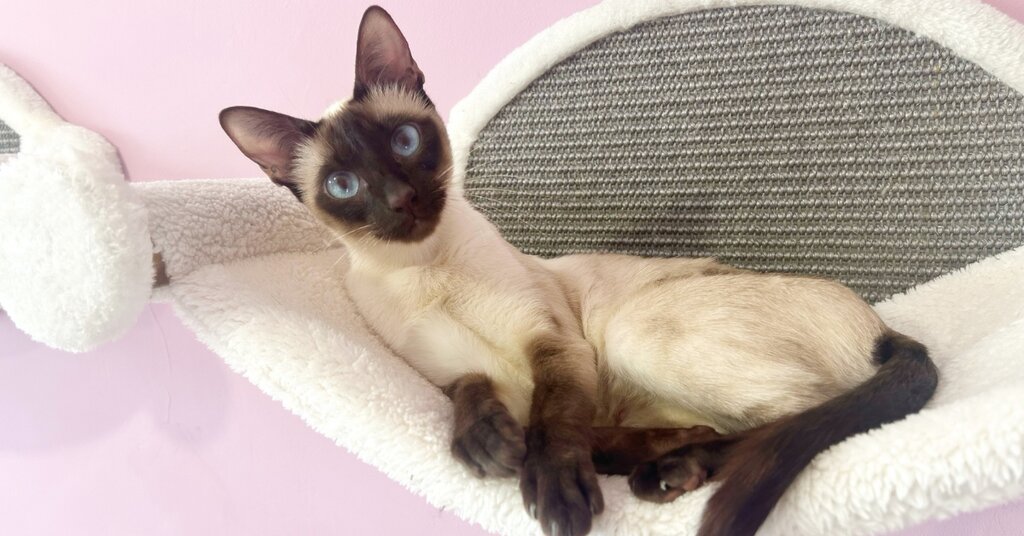
There’s a soundtrack to all of this, and it’s worth being honest about it. A Siamese greets you at the door — loudly. It answers when you speak to it. It announces visitors, complains about closed doors (on principle — it doesn’t necessarily want to go through, it just objects to the door being shut), and offers commentary on your cooking. On a working-from-home day you’ll have a colleague who attends every video call. At the weekend you’ll have a shadow that joins you in the garden, the bathroom and whatever you’re doing in between. None of this is the cat misbehaving. This is the breed working exactly as designed.
For the right person, that’s heaven. For someone who wants a quiet, independent cat that mostly does its own thing, it’s a lot. Both reactions are valid — which is exactly why it’s worth being honest about your own lifestyle before you commit.
How a Siamese compares with other cats
A useful way to decide whether a Siamese is right for you is to see the breed alongside the alternatives people most often weigh it against. Every cat is an individual, but as breed generalisations go these hold up well:
| Siamese | British Shorthair | Ragdoll | Moggy | |
|---|---|---|---|---|
| Affection style | Velcro — on you, involved in everything | Affectionate but independent; near you, not on you | Relaxed, floppy lap cat | Varies hugely |
| Voice | Loud, frequent, conversational | Quiet | Quiet | Varies |
| Need for company | Very high — struggles alone all day | Moderate — copes well alone | High, but calmer about it | Varies |
| Energy & play | High, kitten-like for years | Low to moderate | Moderate | Varies |
| Grooming | Minimal — weekly brush | Weekly brush, dense coat | Regular — semi-longhair | Coat-dependent |
The short version: if you love the Siamese look but your household is out all day and you want a calm, self-contained companion, a British Shorthair is honestly the better fit — they’re the most popular pedigree cat in the UK for a reason. If you want devoted affection with less volume, look at a Ragdoll. But if you read the day-to-day picture above and thought “that sounds wonderful” rather than “that sounds exhausting” — the Siamese has no equal. Nothing else combines that intelligence, that devotion and that conversation in one cat.
A Siamese is probably right for you if…
- You’re home a good part of the day, work from home, or have another pet for company — Siamese hate being alone for long stretches.
- You want an interactive, “talkative”, follow-you-everywhere cat and will genuinely enjoy the chatter.
- You can give daily play and attention — 20–30 minutes of real engagement, plus enrichment like climbing and puzzle feeders.
- You’re ready for a 15–20 year relationship with a cat that stays kitten-like and involved.
- You want a cat that’s genuinely affectionate, bonded and a bit of a character.
- Everyone in your household is on board — a Siamese adopts the whole family (though it will pick a favourite).
A Siamese probably isn’t right for you if…
- You’re out at work all day, most days, with no other pet and no one home. A lonely Siamese can become anxious, depressed or destructive — this is the single most common bad match I see, and it isn’t fair on the cat.
- You want a quiet, low-demand cat that does its own thing. The Siamese voice and need for attention won’t suit you — and that’s completely fine; it just means a more independent breed is a better fit.
- You can’t commit time to play and mental stimulation day in, day out.
- You’re house-proud to the point that the odd knocked-over ornament would genuinely upset you.
- Anyone at home needs silence — for night shifts, a light-sleeping baby, or simply by temperament. The Siamese voice carries, and they don’t save it for office hours.
There’s no shame at all in deciding a Siamese isn’t your cat. Choosing well is the kindest thing you can do — for you and for the kitten. Not sure where you land? Take the quiz for an honest, tailored result.
If what you want is the opposite, a quiet and undemanding cat that is happy to get on with its own day, that is close to a British Shorthair’s job description. It is the other breed we keep, so treat this as a recommendation with a declared interest attached: a British Shorthair kitten from our own cattery in Fareham, a litter or two a year.
What a Siamese costs in the UK
Money is part of the honest conversation, so let’s have it. A well-bred, health-tested, GCCF-registered Siamese kitten from a responsible breeder typically costs somewhere in the high hundreds of pounds — exactly where in that range depends on the breeder, the line and the colour. You will see cheaper kittens advertised with no paperwork; I’d urge real caution there (more on that below).
The purchase price, though, is the small number. Over a 15–20 year life you should budget for quality food, insurance (worth every penny for a pedigree cat), routine vet care and vaccinations, neutering, and the enrichment kit a Siamese genuinely needs — a decent cat tree, scratching posts, toys worth rotating. Realistically that’s several hundred pounds a year, every year, for the life of the cat. A Siamese is a long-term financial commitment as well as an emotional one, and it’s far kinder to know that now than to discover it at the first unexpected vet bill.
Kitten or adult? Don’t rule out an older Siamese
Everyone pictures a kitten, but an adult Siamese deserves a thought — especially if the kitten months (and their chaos) don’t appeal. Breeders occasionally rehome retired breeding cats: adults with known temperaments, fully health-checked, often delighted to swap a busy cattery for a sofa and a person of their own. Breed rescue organisations also rehome Siamese whose owners’ circumstances changed. An adult settles differently from a kitten — a little more slowly at first, then every bit as devoted. What you lose in kitten antics you gain in knowing exactly what cat you’re getting: the voice, the temperament and the affection are already on full display. If that appeals, keep an eye on our adult Siamese rehomes page, and mention it when you speak to breeders — most know who has a retired cat looking for a home.
Finding the right breeder (and dodging the wrong ones)
If you do decide a Siamese is for you, the breeder you choose matters more than any other decision you’ll make. A good breeder does far more than produce pretty kittens: they socialise them in a home, health-test their breeding cats, register every kitten with the GCCF, and let them leave only when they’re fully vaccinated and at least 13 weeks old.
What to expect from a responsible breeder: you’ll see the kittens with their mother in the home they were raised in; you’ll get GCCF registration paperwork, a vaccination record and feeding notes; the kitten will be confident, curious and used to household life; and — this is the tell — the breeder will interview you as thoroughly as you interview them. When a breeder asks about your work pattern, your household and your plans, that’s not nosiness; that’s someone who cares where their kittens end up. (It’s exactly what the quiz on this page asks, for the same reason.)
Red flags to walk away from: kittens “ready now” at 8 or 9 weeks; no registration papers (“pure Siamese, just no paperwork”); prices that look too good to be true; never seeing mum or the home; multiple litters always available; and a seller with no questions for you at all. A bargain kitten from an untested, unregistered source is no bargain — in vet bills or in heartache.
When you’re ready, start with our directory of Siamese cat breeders and the kittens for sale page, and prepare your home with the new kitten checklist.
Frequently asked questions about Siamese cats
Are Siamese cats friendly?
Exceptionally — it’s the breed’s defining trait. Siamese are among the most people-friendly cats there are: they greet visitors, seek out laps, follow their humans everywhere and genuinely dislike being left out. The flip side of all that friendliness is that they need the company returned — a friendly cat in an empty house is a lonely cat.
Are Siamese cats good pets?
Yes — for the right home. Siamese are affectionate, sociable, intelligent and devoted, which makes them wonderful companions for people who are around and want an interactive cat. They’re a poor fit for homes that are empty all day or want a quiet, hands-off cat. Match the cat to your lifestyle and a Siamese is one of the best companion cats there is.
Are Siamese cats hypoallergenic?
No cat is truly hypoallergenic, and Siamese are no exception — but their short, fine coat sheds less than many breeds, and some allergy sufferers do find them easier to live with. Read our full guide to whether Siamese cats are hypoallergenic.
Are Siamese cats clingy?
By most cats’ standards, yes — and Siamese people consider that a feature, not a fault. Your cat will want to be in the same room as you, ideally touching you, and will object (audibly) to closed doors between you. If “clingy” sounds endearing, you’re the right sort of owner; if it sounds suffocating, choose a more independent breed.
How vocal (noisy) are Siamese cats really?
Very. This is the trait people most often underestimate. Siamese “talk” throughout the day in a loud, distinctive voice, and a bored or lonely one gets louder. If constant chatter would wear you down, the breed isn’t for you; if you’d love a cat that genuinely communicates, you’ll adore it.
Do Siamese cats like being picked up and held?
Most enjoy close contact far more than the average cat — many ride shoulders, drape across laps and sleep pressed against you. As with any cat, it depends on the individual and on gentle handling from kittenhood; a well-socialised Siamese is usually a very “handleable” cat.
Are Siamese cats good with dogs?
Generally, yes. Siamese are confident and sociable, and raised alongside a calm, cat-friendly dog they often become firm friends. The key is careful, gradual introductions and a dog that’s gentle with cats. Read the full guide to Siamese cats and dogs.
Do Siamese cats get on with other cats? Do they need a companion?
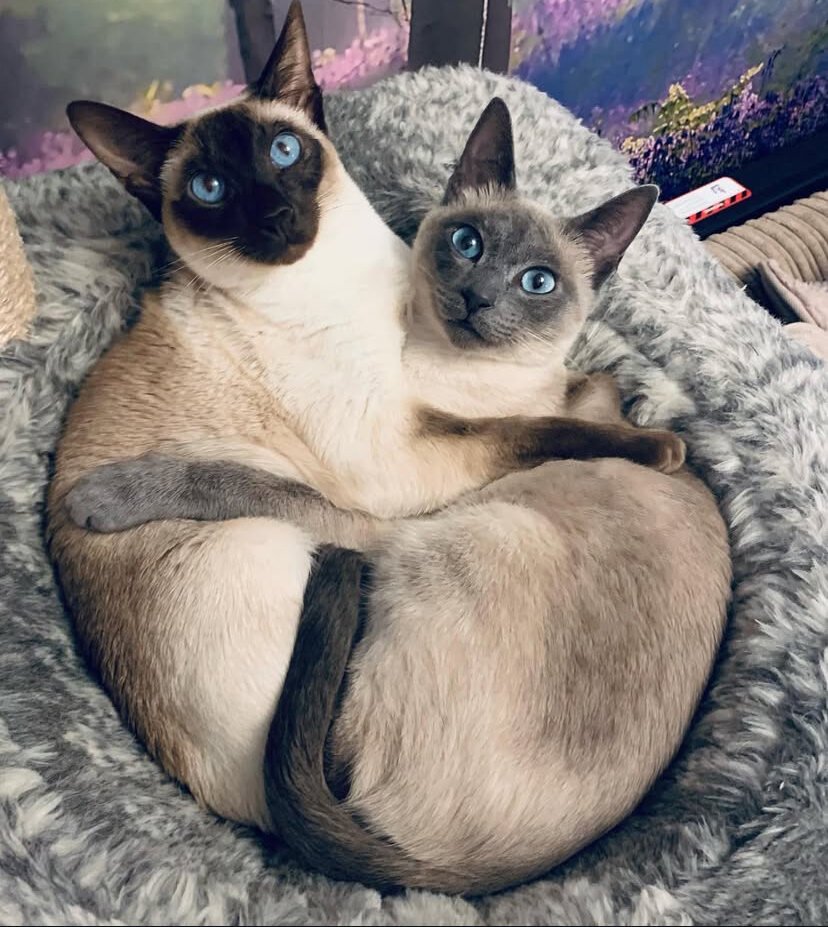
They usually do well with other cats, and because they hate being alone, a second cat — ideally another Siamese or an equally sociable breed — can be a brilliant solution if you’re out during the day. Two Siamese will keep each other company, play together and settle far better than one left alone. More on Siamese cats living with other cats.
Are Siamese cats good with children?
Yes, with gentle, respectful children. Siamese are playful and tolerant, and often gravitate to the busiest, most fun member of the household. As with any cat, teach children to handle them kindly and give the cat an escape route to quiet space.
Are Siamese cats aggressive?
Not by nature — they’re one of the more people-loving breeds. Signs read as “aggression” are usually boredom, loneliness, over-stimulation or pain. A Siamese whose needs for company and stimulation are met is affectionate and gentle.
Do Siamese cats shed a lot? Are they high-maintenance to groom?
Grooming-wise they’re easy — the short, close coat needs only a weekly brush and sheds relatively little. The “maintenance” with a Siamese is emotional and mental (company, play, stimulation), not the coat.
Can you train a Siamese cat?
Yes — more easily than almost any other breed. Many Siamese learn to fetch, sit, come when called and walk on a harness, and they take to clicker training quickly because they love both the attention and the mental work. Five minutes of training a day is wonderful enrichment for them.
Can you leave a Siamese alone? Do they get lonely?
A short working day is manageable with enrichment, but Siamese genuinely don’t cope with being left alone all day, every day — they’re prone to loneliness, stress and destructive behaviour. If you’re out a lot, please consider a second cat for company, or a more independent breed.
Do Siamese cats sleep in your bed?
If you let them — absolutely, and preferably under the covers, pressed against you. Siamese seek warmth and contact, and most owners give up the argument early. If a cat in the bed is a hard no for you, be prepared to provide a genuinely cosy alternative (a heated cat bed earns its keep) and to hear some opinions about the bedroom door.
Should a Siamese be an indoor or outdoor cat?
Most Siamese breeders, myself included, recommend keeping them indoors or giving them safe, enclosed outdoor access — a secure garden or a cat run. They’re valuable, trusting and not road-wise, and an indoor Siamese with enrichment lives a happy, safe life. See our guides on the indoor or outdoor question and keeping indoor cats happy.
Male or female Siamese — which makes the better pet?
For a neutered pet, honestly, there’s little in it — both make devoted companions. As broad strokes: many find neutered males the more openly soppy and “in your face” affectionate, while females can be a touch more self-contained and selective about their favourite person. Temperament varies far more between individual cats than between the sexes, so choose the kitten whose personality fits, not the sex.
How much does a Siamese cat cost in the UK?
Expect a meaningful price for a well-bred, health-tested, GCCF-registered kitten, plus ongoing costs for quality food, insurance, vet care, neutering and enrichment. A Siamese is a 15–20 year companion, so buy from a responsible breeder rather than the cheapest source — a bargain kitten from an unhealth-tested line can cost far more in vet bills and heartache.
How long do Siamese cats live?
Siamese are a long-lived breed — often 15–20 years — so getting one is a genuine long-term commitment.
Where do Siamese cats come from?
The breed traces back to Thailand (historically Siam), where they were prized, even revered, cats. Read more about the history of the Siamese cat.
Still think a Siamese is for you?
If you’ve read the honest version and a Siamese still sounds like your cat — wonderful. The next step is finding a healthy, well-socialised kitten from a responsible, GCCF-registered breeder, and getting your home ready with our new kitten checklist.
Browse our Siamese kittens & breeders →
And if you’d like one more sanity-check first, take the quiz — pop in your email and we’ll send your result plus a few honest pointers.