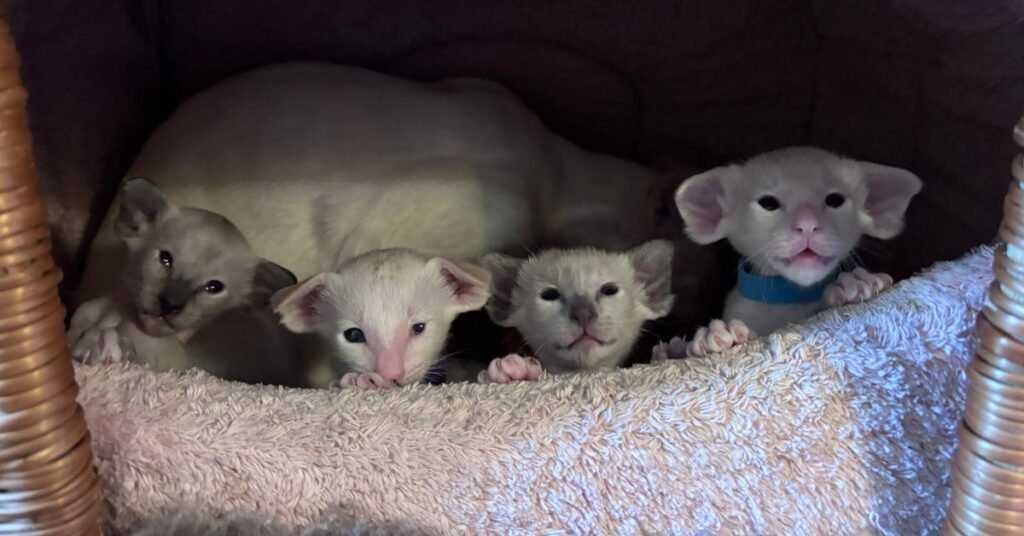
The kittens are here. Everyone is alive, the queen is purring like a tractor, and you have had about four hours’ sleep since Tuesday.
Then somebody asks if they’re registered.
Registering a litter with the GCCF is not difficult, but it is fiddly, and the fiddly bits all have to be in place before the kittens are born. Get them wrong and you can end up with a litter you cannot register at all. This is the new breeder’s version: what to sort out first, what happens online, and what goes home with each kitten at 13 weeks.
Here is the whole paperwork trail in order, so you can see where you are.
| When | What needs doing | Whose job |
|---|---|---|
| Before the mating | Prefix registered; queen in your name on the Active register; stud on the Active register | You |
| Collecting your queen | Completed certificate of mating | The stud owner |
| After the birth | Sex and colour of every kitten checked, twice | You |
| Registering the litter | Litter registered online, a name for each kitten, Active or Non-Active for each | You |
| Going home, 13 weeks or older | Registration card, pedigree and vaccination record handed over | You |
| After collection | Kitten transferred into the new owner’s name | The new owner |
Sort this out before she is even mated
Most registration headaches start months before the birth. By the time you are filling in a form, it is too late to fix any of these.
Your prefix. Every kitten you register carries your cattery prefix for life, and it takes months to come through, so this is the first job, not the last. The rules are in the next section.
Your queen, in your name, on the Active register. The GCCF treats the breeder of a litter as the registered owner of the queen on the day the kittens are born. So if she is still in her breeder’s name, or you bought her on the Non-Active register, deal with that first. A Non-Active queen’s kittens cannot be registered as her progeny. (Ask me how many people find that out at the worst possible moment. Actually, don’t.)
A stud on the Active register. Same rule, other side of the pedigree. I cover what else to check in my guide to buying your first breeding queen, and the day itself in going out to stud for the first time.
The mating certificate. Under GCCF Rule 3d, the stud owner must give you a completed certificate of mating when you collect your queen. You need a copy of it to register the litter, unless you happen to own the stud as well. Put it somewhere safe. Not “somewhere safe” in the drawer with the takeaway menus. Somewhere you will actually find it nine weeks later.
Getting your GCCF prefix: the rules that matter
Your prefix is the first word of every kitten’s registered name, and once it is granted nobody else can use it. Here is what the GCCF’s own prefix application notes (the March 2023 version) say.
| Rule | What it means for you |
|---|---|
| Club membership | You must belong to at least one GCCF member club. Provisional membership does not count, and some clubs want a year’s membership before they will certify your form |
| Choices | Give at least four names, in order of preference. Variations of the same word are rejected |
| One word | Letters only, plus four symbols: ! * – and the apostrophe |
| Length | A cat’s full registered name is capped at 30 characters including spaces, and the prefix counts towards it |
| Banned | Names suggesting you are the main breeder in an area, words close to an existing prefix, feline titles (Champion, Premier, Supreme and so on), breed names, and anything the Board thinks unsuitable |
| Timing | Processing takes roughly 16 to 20 weeks |
| Which litters | Normally only litters born on or after the date the GCCF receives your correctly completed application |
| Fee | £75 for a UK applicant at the time of that form; check the current price list |
Three of those are easy to get wrong.
Allow five months. If your queen is mated the week you post the form, the kittens will be born before your prefix is granted. Apply before you even choose a stud.
You cannot add it later. A prefix cannot be added to a cat’s name after registration, so a litter registered without one stays without one for life.
Spelling is permanent. A typo, or a change of heart, cannot be corrected once the prefix is granted. Say it out loud. Write it in front of a kitten’s name. Imagine a judge reading it out at the Supreme. Then post the form.
If you are still stuck for a name, play with my cattery prefix generator or browse 80+ cattery name ideas by style. Then check every shortlisted name against the existing prefixes before you fall in love with it.
Check the small print with the stud owner
Stud owners are allowed to set conditions, as long as those conditions do not break GCCF rules. The common one: some ask for every kitten from the mating to go on the Non-Active register.
That is a perfectly reasonable thing for a stud owner to want.
It is also something you need to know before the mating, not after. Agree it, write it down, and make sure you both mean the same thing by it.
Who registers the litter, and how
You do. The breeder registers the litter, and the breeder is whoever owned the queen on the date of birth.
It is done through GCCF Online Services. Go to gccfcats.org, use Login/Register in the top menu, and work through the litter registration from your profile. Have these ready before you start:
- your queen’s and stud’s registration details
- the mating certificate
- the date of birth, and the sex and colour of every kitten (my guide on how to sex a kitten is worth a read first)
- a registered name for each kitten, prefix first
Fees change, so check the current fee on the GCCF site rather than trusting a number from a blog post. Including this one.
Names catch more new breeders out than the form does. Kitten names have a character limit and some words are off limits, so read my article on how to name a pedigree kitten under the GCCF rules before you commit a whole litter to a theme. The GEMS code for each colour is the other bit people guess at, and my simple guide to Siamese and Balinese GEMS codes saves the guessing.

Active or Non-Active: the decision is yours
Here is the part that surprises people. The GCCF does not decide whether each kitten can be bred from. You do, kitten by kitten, when you register them.
Active means you are registering that kitten as suitable for breeding. Non-Active means it is sold as a companion, and possibly for showing, but its kittens cannot be registered.
My view is the same one I give in my complete guide to breeding Siamese cats: pet kittens go on the Non-Active register, and Active status is for kittens with the type, temperament and health results to justify it, going to people you have vetted as breeders. If a buyer wants the option to breed later, the GCCF’s own advice is to agree the conditions in writing, signed by the breeder. Do that. A handshake at the front door is not a condition.
A few situations take the choice away from you:
- Close matings. The GCCF requires kittens from these to go on the Non-Active register.
- White cats. Since 1 June 2016, any white cat of any breed needs a bilateral hearing certificate lodged with the GCCF before it can be registered as Active. If you breed Foreign Whites, that one is yours.
- Your breed’s own registration policy. Each breed has one, set through its Breed Advisory Committee and published on the GCCF breed pages. Read the one for your breed before you plan a mating, not after.
Full, Supplementary, Reference: which register?
Separate from Active and Non-Active, every kitten lands on one of the GCCF’s registers, and it depends on the pedigree behind it.
The Full register is for kittens from a mating that is ideal for the breed. The Supplementary register covers a slightly different background, such as a more experimental colour or a development programme close to completion. Both can be shown. The Reference register is for something more unusual in the pedigree, such as a recent outcross or an import, and cats on it cannot be shown in pedigree competition classes.
For a first litter from two well-bred Siamese, you are almost certainly looking at the Full register. If the GCCF puts your kittens somewhere you did not expect, the pedigree is the first place to look.
Cats can work their way up. For Siamese, the Old-style Siamese Club sets out the route like this: a Reference register cat needs three generations of mating to pure Siamese for its descendants to reach the Supplementary register, and three more to reach Full. Siamese-pattern kittens bred from Oriental lines start on the Supplementary register. (Older registration certificates use abbreviations for this, such as CSRef, CSSR and CS, which is why your queen’s card may not say it in words.)
The practical tip: if your queen and your chosen stud are on different registers, ask the GCCF which register the kittens will go on before the mating. It is a two-minute email that saves a very awkward conversation with a buyer later.
What “GCCF registered” actually means
GCCF stands for the Governing Council of the Cat Fancy, the main registry for pedigree cats in the UK.
And here is the bit that trips up buyers and breeders alike: the GCCF registers cats and prefixes. It does not register breeders, and it does not register catteries. You will see “GCCF registered breeder” on adverts everywhere, but what a buyer should really be looking for is a breeder with a GCCF prefix who registers every litter.
So when a buyer asks you how they can check, tell them exactly what to ask for: the kitten’s registration card, the registration details of both parents, and your prefix. If you are proud of your paperwork, you will never mind being asked. If a breeder minds, that tells the buyer everything.
What goes home with each kitten
Under GCCF Rule 10, if a kitten is registered when it is sold, the seller gives the new owner the GCCF registration card so they can transfer the kitten into their name. The new owner does the transfer online, through the same Login/Register route.
The GCCF also tells buyers to check they have a pedigree, the registration card and a vaccination record showing two vaccinations three weeks apart. So that is your minimum. Mine never leave before 13 weeks, and by then the paperwork should be ready and waiting, not promised in the post.
I put the rest of the going-home pack in my article on kitten pack ideas for new owners.
Why a buyer who wants to show needs you to be quick
This is where the judge in me gets twitchy.
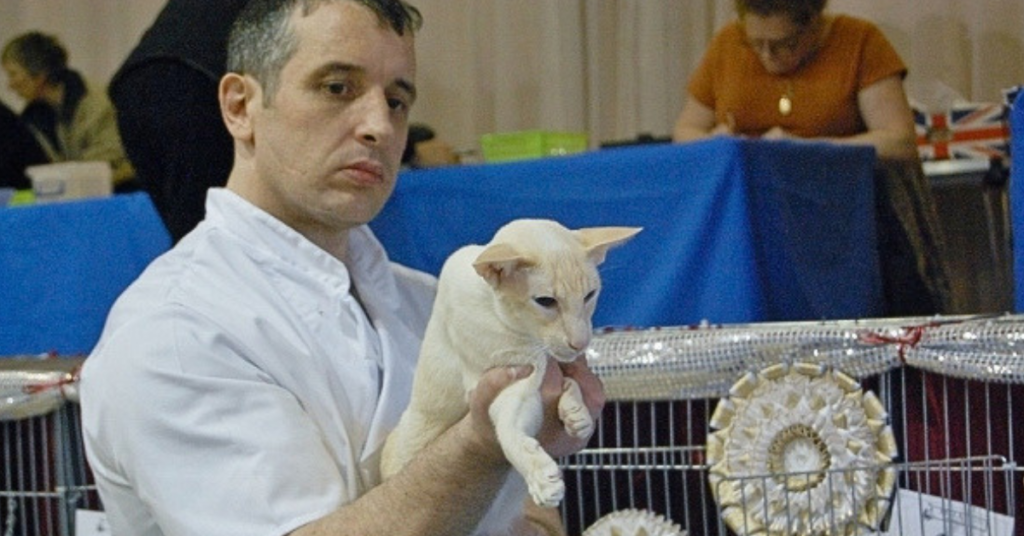
At a GCCF show, the exhibitor has to be the registered owner of the cat. One 2026 show schedule asks for the transfer into the exhibitor’s name no later than ten days before the show. So if you sell a kitten to someone who wants to show it, and their registration card turns up a month late, you have quietly cost them their first show.
Get the cards out on time. Your reputation travels round the show hall faster than you would believe.
What registration does not tell anyone
A GCCF registration proves who a kitten’s parents are. It does not prove the kitten is healthy, well socialised, or that it came from a good home.
That part is on you, every single litter.
Which is why I would rather you spent as much time on your kitten’s first thirteen weeks as you do on the forms.
GCCF registration: quick answers
Can a Non-Active cat be changed to Active?
Only by the breeder who registered it. If you are promised a change later, get the conditions in writing, signed by the breeder.
Who registers the litter if the queen is still in her breeder’s name?
Her registered owner on the date of birth is the breeder of the litter. Transfer her into your name before she is mated, not after.
Do I need the mating certificate?
Yes, unless you own the stud as well. The stud owner must give you one when you collect your queen.
What paperwork should a GCCF registered kitten go home with?
The registration card so the new owner can transfer it, a pedigree, and a vaccination record. That is the minimum the GCCF tells buyers to check for.
How long does a GCCF prefix take?
The GCCF’s prefix notes say roughly 16 to 20 weeks. Apply before your queen is mated, because a prefix only covers litters born after your application arrives.
Can I add my prefix to a kitten that is already registered?
No. A prefix cannot be added to a cat’s name after registration.
What does GCCF stand for?
The Governing Council of the Cat Fancy.
Once the litter is registered
Now you need homes. My guide to dealing with kitten enquiries and spotting the time-wasters will save you a lot of evenings.
If you breed Siamese or Orientals under a GCCF prefix, you can also list your cattery and your litters in the directory here. Every listing is checked before it goes live, and buyers come here looking for exactly what you have just registered.
I’m writing a book for new breeders, Your First Litter, that takes you from choosing a queen to going-home day. Join the list below and you’ll hear the moment it’s ready.