Buying your first breeding queen is the single biggest decision you will make as a new breeder. Bigger than the prefix. Bigger than the stud. Bigger than the kittening box you will spend far too long choosing.
Get the queen right and everything after it is easier. Get her wrong and you can spend years, and a frightening amount of money, trying to breed your way out of it.
So before you hand over a penny, here is what I would check. Some of it is GCCF paperwork, some of it is health, and some of it is simply whether the person selling her is someone you want in your life for the next six years. (You do. That is the whole point.)
| Check | What good looks like |
|---|---|
| Register | Sold on the GCCF Active register, or written, signed conditions for moving her to Active |
| Ownership | Transferred into your name before she is mated |
| Pedigree | At least five generations of GCCF registered ancestors |
| Health (Siamese and Oriental) | PRA-Rdac DNA test, FIV and FeLV screen, vet health check |
| Age | At least twelve months before her first mating |
| History | How many litters she has had, and how they went |
| The breeder | Shows, health tests, asks you questions, offers to mentor you |
First, be honest about why you want her
If the plan is to buy a queen because pedigree kittens sell for good money, stop here.
Breeding does not pay for itself. Stud fees, health tests, vaccinations, the emergency vet at 3am, the food, the heating, the time off work: I set the real costs out in my complete guide to breeding Siamese cats, and it is not a business plan. If that hasn’t put you off, my ten questions to ask yourself before becoming a cat breeder will finish the job or confirm you are ready.
Still here? Good. Let’s find you a queen.

She must be sold on the Active register
This one is non-negotiable. A queen on the GCCF Non-Active register can be loved, shown and spoiled rotten, but her kittens cannot be registered as her progeny.
The breeder decides each kitten’s register when they register the litter, so a breeding queen is a deliberate choice on their part. Some breeders sell a girl on the Non-Active register and agree to change her to Active once conditions are met, such as health tests or a first show. That is fine, but the GCCF’s own advice is to get those conditions in writing, signed by the breeder. Do it before you collect her, not when you are ready to mate her and the breeder has stopped answering the phone.
Then make sure she is transferred into your name. For GCCF purposes, the breeder of a litter is the registered owner of the queen on the day it is born. I explain why that matters in my guide to registering a litter with the GCCF.
Read the pedigree, all of it
Ask to see at least five generations of GCCF-registered pedigree. Three is what a lot of people will show you. Five tells you much more about what she might carry and how closely her lines have been bred.
You do not need to be a geneticist to read one. You do need to know what colours she could produce, because your waiting list will ask on day one. My free Siamese colour genetics course for breeders takes you from “what is a carrier” to reading a pairing, and the colour predictor does the sums for you. My guide to how cat pedigrees work covers the layout.
Health tests for a Siamese queen
For Siamese and Orientals, the core checks are a PRA-Rdac DNA test, an FIV and FeLV screen, and a general health check from a vet. Anything beyond that is case by case, depending on her lines. My article on PRA in Siamese cats and DNA testing explains why that test matters so much in this breed.
You may read elsewhere that every queen should be blood typed. For Siamese, Oriental and Balinese matings it is not needed, because the breed group is blood group A. It only matters if you ever plan an outcross to a stud of another breed. Other breeds have different rules, so never carry this one across.
Choosing the girl, not just the paperwork
Paperwork tells you she can be bred from. It does not tell you she should be. When you go to see her, look at the cat in front of you, and at the litter she came from.
| Good signs | Walk-away signs |
|---|---|
| Well grown for her age, compared with her littermates and other litters | Small or scrawny at collection, even if she looked fine at your first visit |
| Friendly, confident, happy to be handled | Nervous, jumpy or unsettled temperament |
| From a healthy litter, with no defects among her littermates | Littermates with defects such as heart problems, kinked tails or extra toes |
| Her mother kittened easily and raised her litters well | Any history of cat flu, however “completely better” she is now |
| Eats well and is a good example of the breed | A fussy eater, or obvious faults against the breed standard |
Do not buy the pretty little runt because you feel sorry for her. (It is tempting. Your vet bills will not thank you for it.) Look at several litters before you choose, so you know what well grown actually looks like.
If you do not trust your own eye yet, that is sensible, not a weakness. Ask an experienced breeder with nothing to sell you to come and look with you. A second pair of eyes that is not attached to a sale is worth its weight in gold.
Age, and the litters she has left
A queen should be at least twelve months old before her first mating. Between litters she needs rest, usually six to twelve months and longer if a kittening took a lot out of her. Most queens retire at around six or seven.
So do the arithmetic. A three-year-old who has already had three litters has fewer ahead of her than a twelve-month-old maiden, and she should be priced and planned accordingly.
Judge the breeder as hard as the cat
The best thing you can buy with a first queen is the person who bred her.
A good breeder will ask you as many questions as you ask them. They will want to know where she will live, who your stud will be and what you will do with the kittens. They will tell you about the faults in their own lines without being asked.
They will also answer the phone the night your queen goes into labour and you are not sure whether that is normal.
Be wary of the opposite, too. A breeder who will sell you a breeding girl without asking you a single question does not care enough about where she ends up, and that tells you how much they cared about everything else.
Before you buy anything, go to a few shows. Watch the judging, look at the cats that win, and talk to the people showing them. You will learn more about your breed’s type in two Saturdays than in two months of scrolling, and you will start to work out whose cats you like.
Look for someone who shows, who health tests, and who is happy to mentor you through your first litters. Breed clubs are a good place to start: the Siamese Cat Association, the Siamese Cat Club and the other Siamese clubs all know who is breeding what. Be wary of anyone selling breeding queens on general classified sites with no pedigree on show.
Questions to ask before you buy her
Write these down and take them with you. A good breeder will have an answer for every one, and will not mind you asking.
- Is she being sold on the Active register, and if not, what are the conditions for changing her, in writing?
- Can I see her pedigree, and the registration details of both her parents?
- Which health tests has she had, and can I see the results?
- Has she had a litter before? How many kittens, and how did the birth go?
- Was she born naturally or by caesarean, and how did her mother’s kittenings go?
- Has she, or any of her litter, ever had cat flu?
- How old was she when she first called, and how often does she call?
- Are there any conditions on her kittens, such as all going Non-Active, or a kitten back for you?
- Which studs would you suggest for her, and why?
- Will you be on the end of the phone when she kittens?
The last one matters more than all the others put together.
Plan the stud before she calls
She will come into season sooner than you expect, and she will let the whole street know about it. My article on cats in season tells you what to expect.
Line up the stud first. He needs to be on the GCCF Active register and his owner should be able to show you a valid GCCF Certificate of Entirety. Ask what tests they need from your queen and how far in advance, and whether they put any conditions on the kittens, such as all of them going Non-Active. A stud fee pays for the service, not the result, so agree what happens if she does not take.
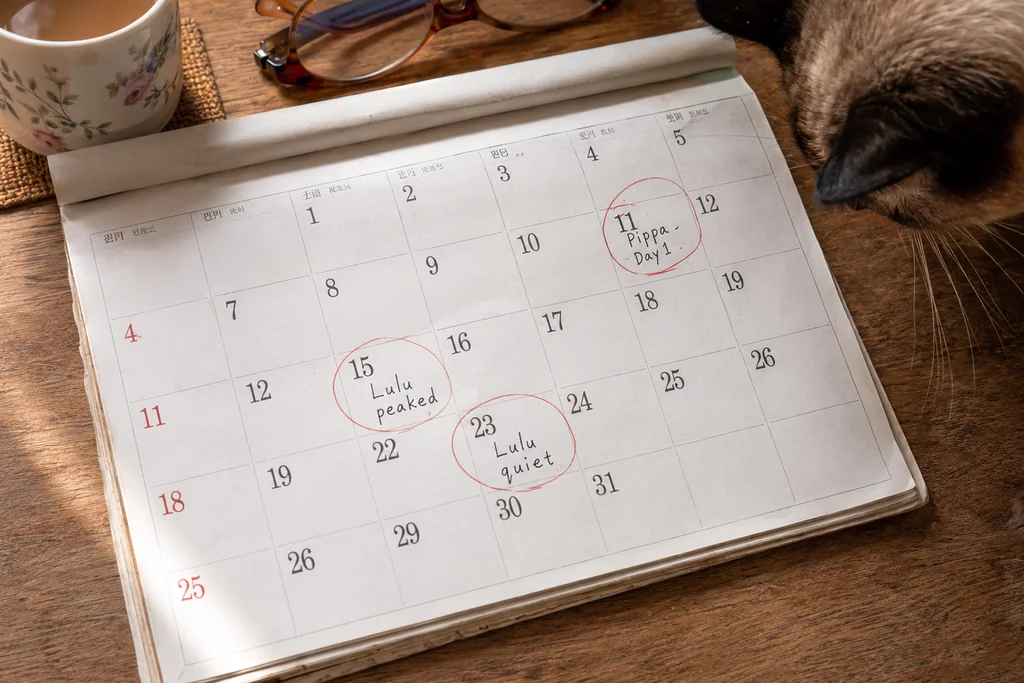
A note on mine, because people ask. Rocky is at closed stud now, so he is not taking outside queens, and Bruno is at limited stud. So if you were hoping to buy a girl and use one of my boys, don’t build your plans around it.
My guide to going out to stud for the first time covers the day itself, and my article on keeping a cat for stud explains why most new breeders are better off not owning one.
The part nobody puts in the advert
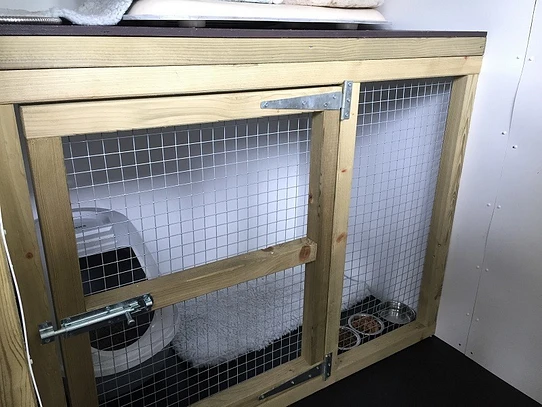
Every litter puts your queen’s life on the line.
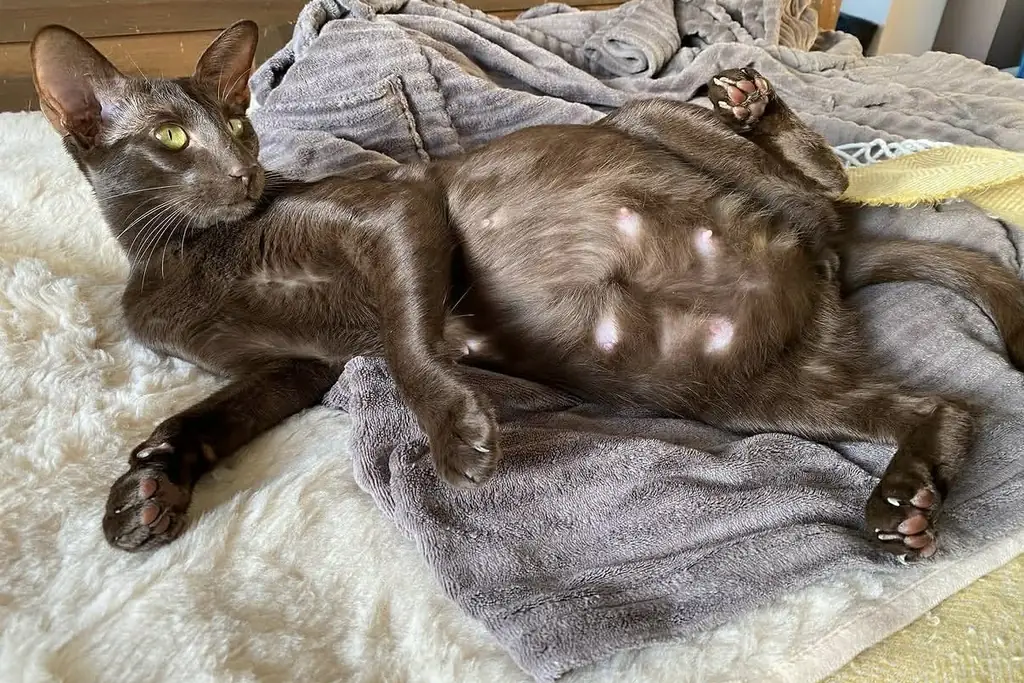
Most kittenings are uneventful. Some are not, and when they are not you will be the one deciding, at speed, whether to pay for a caesarean. Before you buy her, know who your out-of-hours vet is and know that you can afford it. If you can’t, you are not ready for her yet, and that is a perfectly honest place to be.
Buying a breeding queen: quick answers
How old should a queen be for her first litter?
At least twelve months old.
Does a Siamese queen need blood typing?
Not for a Siamese, Oriental or Balinese mating, because the breed group is blood group A. Only if you plan an outcross to another breed.
Can I breed from a cat on the Non-Active register?
You can mate her, but her kittens cannot be registered with the GCCF. Buy on the Active register, or with signed conditions for changing to it.
How many litters can a queen have?
Plan for rest between litters, usually six to twelve months, and retirement at around six or seven. Check your breed club and the GCCF rules for anything stricter.
Should my first breeding cat be a kitten or an adult?
Either can work. A kitten lets you raise her your way; an older girl lets you see her adult type and temperament before you commit. What matters more is that she is sold on the Active register, from a breeder who will mentor you.
What should I look for in a breeding queen?
Good health and health test results, sound temperament, a good example of the breed, a five-generation pedigree, and a mother who kittened easily and raised her litters well.
Where to look
Start with breeders who show and health test, and talk to the breed clubs. The Siamese and Oriental breeders and kittens directory here is a good place to find people breeding the colours you are interested in.
And once you have your prefix and your first litter is on the way, you can list your own cattery in the same directory.
I’m writing a book for new breeders, Your First Litter, that takes you from choosing a queen to going-home day. Join the list below and you’ll hear the moment it’s ready.